
About this book
Ludwig Wittgenstein is considered by many to be one of the most important philosophers of the 20th century. He was born in Vienna to an incredibly rich family, but he gave away his inheritance and spent his life alternating between academia and various other roles, including serving as an officer during World War I and a hospital porter during World War II. When in academia Wittgenstein was taught by Bertrand Russell, and he himself taught at Cambridge.
He began laying the groundwork for Tractatus Logico-Philosophicus while in the trenches, and published it after the end of the war. It has since come to be considered one of the most important works of 20th century philosophy. After publishing it, Wittgenstein concluded that it had solved all philosophical problems—so he never published another book-length work in his lifetime.
The book itself is divided into a series of short, self-evident statements, followed by sub-statements elucidating on their parent statement, sub-sub-statements, and so on. These statements explore the nature of philosophy, our understanding of the world around us, and how language fits in to it all. These views later came to be known as “Logical Atomism.”
This translation, while credited to C. K. Ogden, is actually mostly the work of F. P. Ramsey, one of Ogden’s students. Ramsey completed the translation when he was just 19 years of age. The translation was personally revised and approved by Wittgenstein himself, who, though he was Austrian, had spent much of his life in England.
Much of the Tractatus ’ meaning is complex and difficult to unpack. It is still being interpreted and explored to this day.
Book Details
- Print length
- 95 pages
- Language
- English
- Publisher
- Standard Ebooks
- Publication date
- February 1, 2019
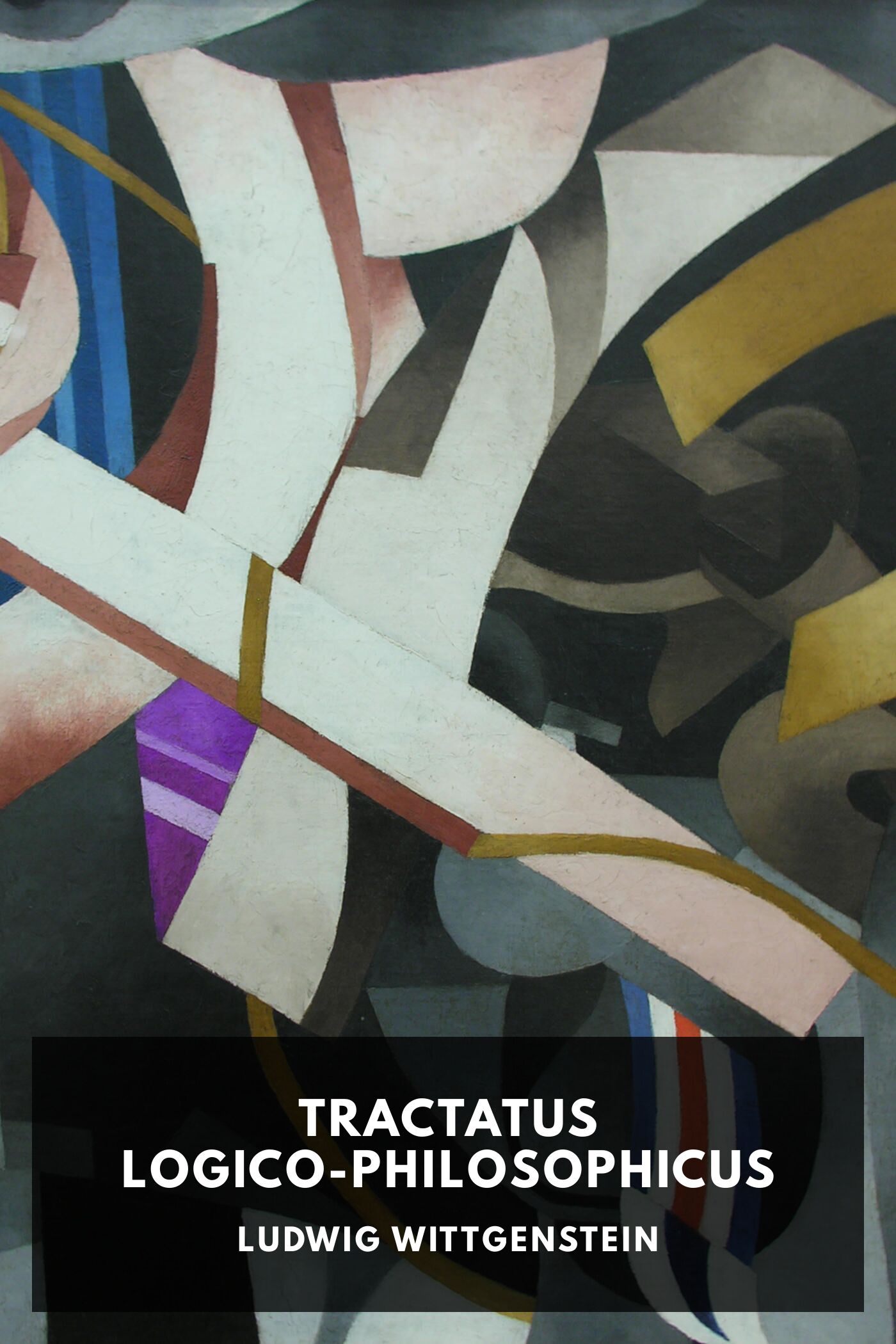
Tractatus Logico-Philosophicus
Ludwig WittgensteinMore from Nonfiction

The City of God
Augustine of Hippo

Narrative of the Life of Frederick Douglass
Frederick Douglass

The Interesting Narrative of the Life of Olaudah Equiano
Olaudah Equiano

Incidents in the Life of a Slave Girl
Linda Brent

The Diary
Samuel Pepys

The Autobiography of Benjamin Franklin
Benjamin Franklin

Personal Memoirs of Ulysses S. Grant
Ulysses S. Grant

The Prince
Niccolò Machiavelli

The Lives and Opinions of Eminent Philosophers
Diogenes Laërtius

Poetry
Voltairine de Cleyre