
About this book
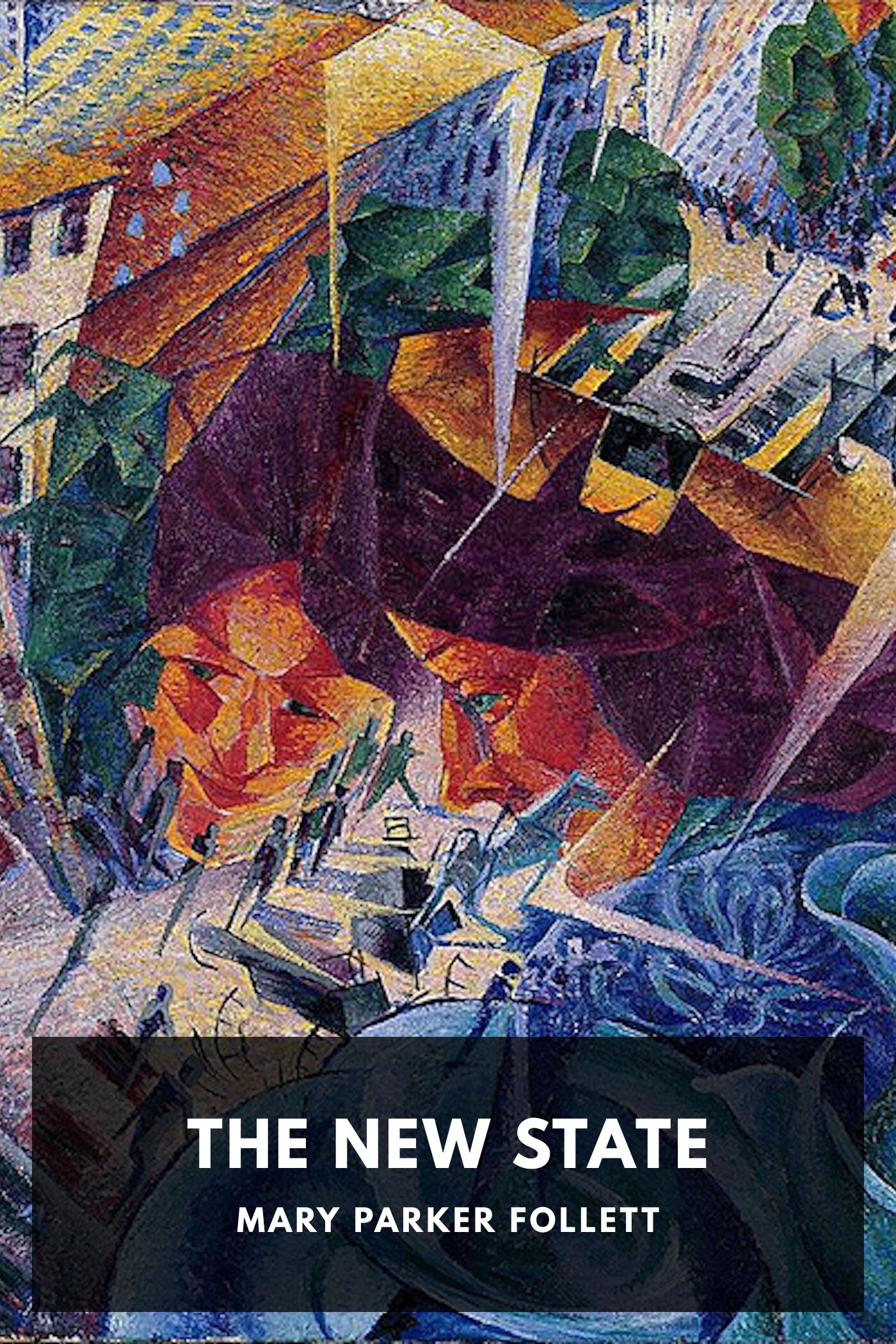
In the New State , management consultant and social theorist Mary Parker Follett investigates the problem of democracy in a pluralistic society. Follett contends that representative democracy has failed to allow citizens the opportunity to express their unique creativity. This goes hand in hand with a public life that is increasingly atomized and unsuited for genuine societal cooperation towards shared goals. In short, a new kind of societal organization is needed.
Follett draws on her experience with group organization to design a new democratic system to take advantage of people’s natural desire to belong to groups. Neighborhood groups, social groups, and professional groups all allow individuals to learn how to cooperate and to set and achieve goals that otherwise could not be completed. Though individuals differ in many important ways, this diversity can be a source of strength in groups in which pluralism is encouraged instead of uniformity. These kinds of inclusive groups can lend structure to a new form of governance: one that is creative, caring, and truly free.
Follett predicts that from small scale groups an ever-widening circle of larger and larger groups will bloom, encompassing local, state, national, and even international communities. Though certainly ambitious, her plan is meticulously crafted and persuasively argued both from an empiric and a philosophic point of view.
First published in 1919 at the end of World War I, Follett’s social theories have garnered renewed interest today, especially among advocates of a more participatory form of democracy.
Book Details
- Print length
- 376 pages
- Language
- English
- Publisher
- Standard Ebooks
- Publication date
- July 22, 2024
The New State
Mary Parker FollettMore from Fiction

Moby Dick
Herman Melville

A Room With a View
E. M. Forster

Crime and Punishment
Fyodor Dostoevsky

Alice’s Adventures in Wonderland
Lewis Carroll

The Count of Monte Cristo
Alexandre Dumas

Middlemarch
George Eliot

The Blue Castle
L. M. Montgomery

The Adventures of Sherlock Holmes
Arthur Conan Doyle

Jane Eyre
Charlotte Brontë

The Mysteries of Udolpho
Ann Radcliffe