

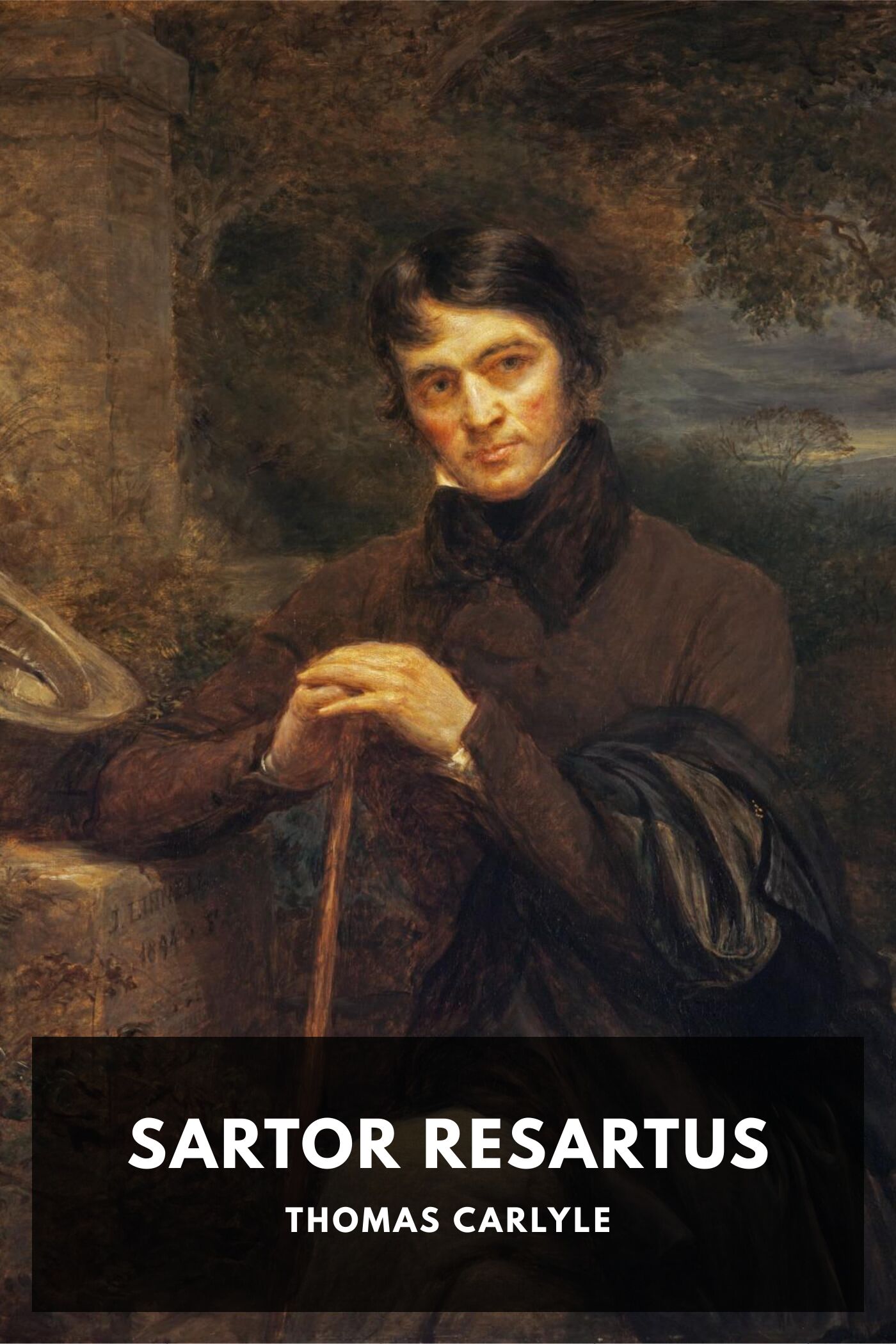
About this book
Sartor Resartus was a strange and new book when it was first published in 1833, and in many ways it remains a strange and new book today. The bulk of the novel takes the form of the a commentary on the life and works of the fictional Diogenes Teufelsdröckh, a sort of renaissance-man German philosopher who develops a “Philosophy of Clothes.” The commentary is composed by a fictional English commentator, known only as the “Editor”; the Editor claims to have translated many of Teufelsdröckh’s ideas and quotes from German. As the commentary progresses, the Editor receives a bag of paper scraps on which are written various autobiographical fragments from Teufelsdröckh’s life. The Editor’s attempts to organize and interpret these scraps forms the second part of the novel.
The work is multi-faceted: sometimes a parody, sometimes a comedy, sometimes a satire, and sometimes seriously philosophical. Some critics consider it an early existentialist text. At the very least its unique structure and use of meta-narrative is hugely influential to modern literature; Borges was said to have memorized entire pages, and modern texts like Nabokov’s Pale Fire borrow liberally from the concept of a meta-narrative organized on scraps of paper.
Book Details
- Print length
- 291 pages
- Language
- English
- Publisher
- Standard Ebooks
- Publication date
- June 13, 2017
Sartor Resartus
Thomas CarlyleMore from Comedy

A Room With a View
E. M. Forster

Alice’s Adventures in Wonderland
Lewis Carroll

The Man Who Was Thursday
G. K. Chesterton

The Adventures of Tom Sawyer
Mark Twain

Cranford
Elizabeth Gaskell

The History of Tom Jones, a Foundling
Henry Fielding

A Midsummer Night’s Dream
William Shakespeare

Pride and Prejudice
Jane Austen

Short Fiction
H. Beam Piper

Golf Stories
P. G. Wodehouse